
Kent County Bench Warrants Explained
What is a Kent County bench warrant, in plain terms? Maryland courts define it around a failure to appear. The judge, from the bench, orders an arrest because a person was required to do something and did not. No new charge is filed. It is the court's own response.
Most Kent County bench warrants begin in District Court, which hears traffic, misdemeanors, certain felonies, and nonfelony ordinance matters. When the underlying case is a serious felony, a family matter, or a juvenile matter, the bench warrant belongs to Circuit Court. Either way, the clerk of that court keeps the file. Start there.
The Kent Traffic FTA That Becomes a Bench Warrant
The usual road to a Kent County bench warrant begins with a payable traffic citation. The citation gets filed, the driver gets a response window, and nothing happens. The court then acts, and the failure to appear turns into an active bench warrant under state law.
Inside that window, Maryland's traffic guidance offers four moves: pay the fine, request a payment plan if eligible, request a waiver hearing, or request a trial. Each one carries different effects. Payment counts as a guilty result. A waiver hearing lets you add an explanation. A trial request brings the officer and witnesses in. The forms warn against sending payment together with a plan, hearing, or trial request.
Once the window closes with no response, this stops being a paperwork problem. Ask the District Court clerk three things: whether the docket shows a failure to appear, whether a Kent County bench warrant issued, and which option the court will still accept.
How Kent County Bench Warrants Are Issued
Only a judge issues a bench warrant, and Maryland gives the court two statutory routes that look different on the docket. The first follows a missed citation. The second follows a person who was released on bail or recognizance and then failed to surrender after the bond was forfeited. Either way, the order lands on the Kent County docket the clerk can read to you.
When the court acts, it can also set a bond. Maryland law lets a judge fix bond on a bench warrant, and posting that bond does something specific: a judicial officer marks the warrant satisfied and the court reschedules the hearing or trial. That is not the same as ending the case. The underlying matter still moves forward.
The docket shows the sequence. A warrant event, a bond event, and a new court date can appear one after another, and an old warrant entry may stay visible even after the court recalls the order. Ask the clerk to walk you through the entries.
Note: The order becomes a court docket event first, and the law-enforcement record follows separately.
Kent Preset Bench Warrants and Bond
Maryland's recall form carries a separate checkbox for a preset bench warrant, and that label matters. It signals the court fixed the bond in advance instead of leaving the amount for a later decision. Ask the Kent County clerk which type is on your case.
Then ask two follow-up questions. What is the preset amount? Does posting it satisfy the order? Do not borrow a figure from another county. No Kent warrant bond schedule and no bond-window hours are published, so the amount and the place to post it come only from the court handling your case.
Bench Warrants and Arrest Warrants Compared
On paper the two orders look alike. Try to clear one, though, and the difference shows fast. An arrest warrant answers a charge. A bench warrant answers the Kent County court itself.
| Point | Bench Warrant | Arrest Warrant |
|---|---|---|
| What triggers it | A missed date, an unanswered citation, or a forfeited bond | A charge supported by probable cause |
| Who orders it | The judge already handling the case | A commissioner or judge on a charging document |
| Bond | Often preset, and posting it can satisfy the order | Set at or after the initial appearance |
| First call | The issuing clerk | The issuing clerk, plus a lawyer |
Both orders can command an arrest, and one person can face both at once. Our Kent arrest warrant page covers the charging side of that split.
Kent Bench Warrant Triggers Under State Law
Maryland splits the two failure scenarios into two statutes. A Kent County clerk can usually tell you which one produced the order.
Criminal Procedure 5-212. A bench warrant may issue when a defendant fails to appear in response to a citation. This is the traffic and citation route.
Criminal Procedure 5-211. A judge may set bond when a person already released on bail or recognizance willfully fails to surrender after forfeiture. Posting the bond makes the warrant satisfied and returns the case to the docket.
Read them side by side and the remedy is where they split. One route may still allow a new court date, a payment plan, or a hearing request. The other is built around a bond.
Resolving a Kent County Bench Warrant
Work through the case, not the building. A recall is a court action. No Kent County office publishes a walk-in counter or a same-day promise.
Before you go: Call the issuing court first. No Kent warrant walk-in docket, surrender window, or published bond schedule exists, so a trip without instructions can end at the wrong office.
- Search the case in the public portal and note the court, case number, and missed date.
- Call the issuing clerk and ask whether the order is outstanding, preset, served, recalled, or satisfied.
- Ask what the court requires next: a bond, a new date, a payment, or a recall request filed by a lawyer.
- If jail is possible, contact a lawyer before any appearance, and ask about public defender eligibility.
- Confirm the order was marked satisfied or recalled, then keep the paperwork.
The CC-DC-CR-015 Recall Form, Field by Field
Maryland publishes a warrant and order recall form showing what a court needs before withdrawing an order. Its fields tell you what to have ready when you call the Kent County clerk.
| Court Caption | Circuit or District Court of Maryland, with the court address. |
|---|---|
| Case Number | The state against the named defendant, with contact details. |
| Warrant Control Number | An internal number that ties the recall to the order. |
| Order Type | Arrest warrant, bench warrant, preset bench warrant, criminal summons, or body attachment. |
| Reason for Recall | Blank narrative lines where the court records why the order is being withdrawn. |
| Signature | A judge, commissioner, or clerk signs and dates it. |
| Agency Notification | The agency notified, the date, and an officer receipt. |
The form is a specimen, not a public filing portal, and it publishes no fee. Ask the clerk which local form or motion is current before filing anything in Kent County.
Finding the Court That Issued the Warrant
Court level decides which number you call. Both Kent trial courts sit at 103 N. Cross Street in Chestertown, and the commissioner station shares the same building.
| Office | Handles | Phone |
|---|---|---|
| District Court clerk | Traffic, misdemeanors, certain felonies, ordinance matters | 410-810-3360 |
| Circuit Court clerk | Serious felonies, family, juvenile, jury cases | 410-778-7477 |
| Commissioner | Charging review, initial appearance, bail | 410-810-3370 |
The Kent County court directory publishes the hours and the building details for each.
No Published Walk-In Docket in Kent County
People sometimes assume Kent County offers a walk-in docket that clears a bench warrant the same afternoon. No such docket is published. What the official pages do show is a clerk window open from 8:30 a.m. to 4:30 p.m. on weekdays, plus a commissioner who handles evenings and weekends. Those are two different things, and the gap between them matters. The commissioner is a judicial officer who takes charging, initial appearances, and bail questions. That role is not a public counter where you can surrender on a warrant or ask for warrant status. Before you drive anywhere, call and ask the court where it wants you. The Sheriff's Office serves court process all over Kent County, yet it publishes no surrender hours either. Ask first, then go.
Reading Kent Bench Warrant Status Words
Four words carry the whole conversation, and a clerk will use them precisely.
- Recalled
- The court withdrew the order, and the agency record may need a separate update.
- Satisfied
- The required bond, payment, or appearance was completed; the case itself can stay open.
- Served
- The order was carried out, which does not end the underlying matter.
- Quashed
- The court set the order aside; confirm it is still current before relying on the word.
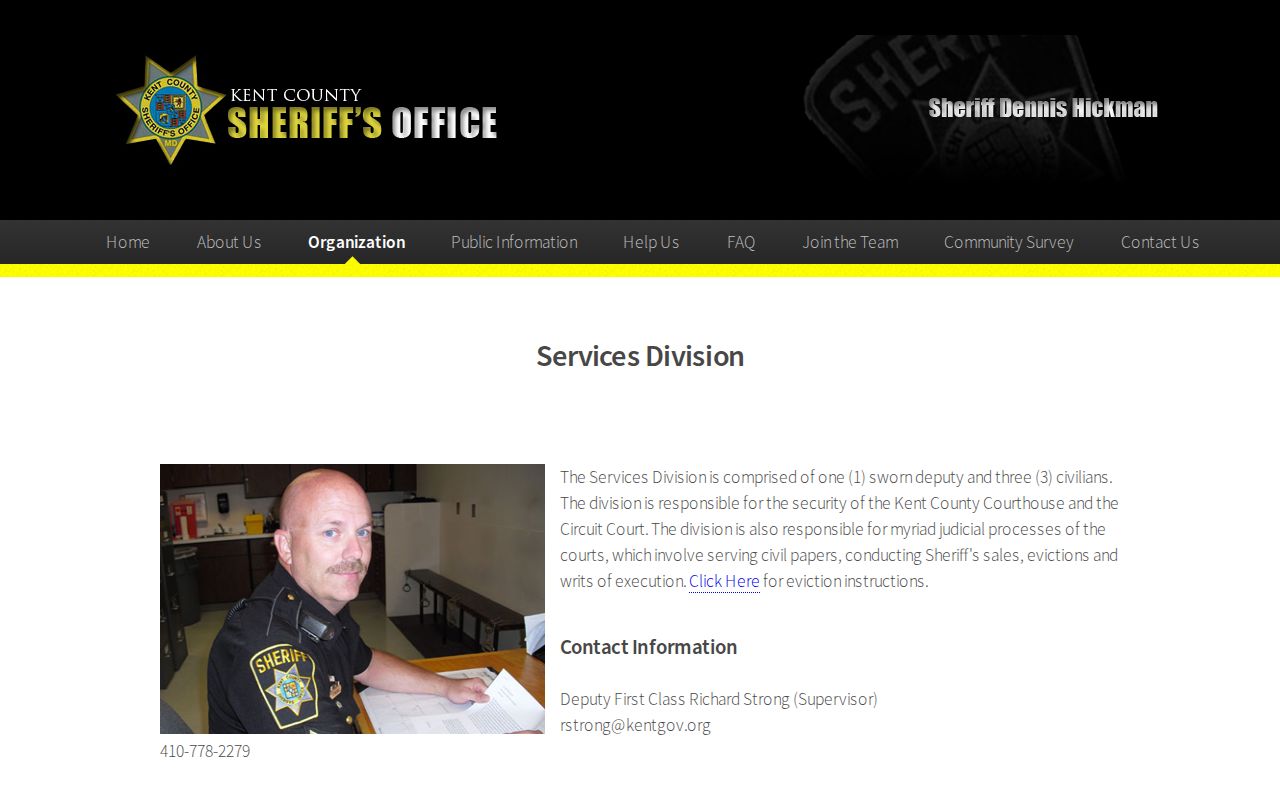
The Kent County Sheriff's services page leans heavily toward serving court process.